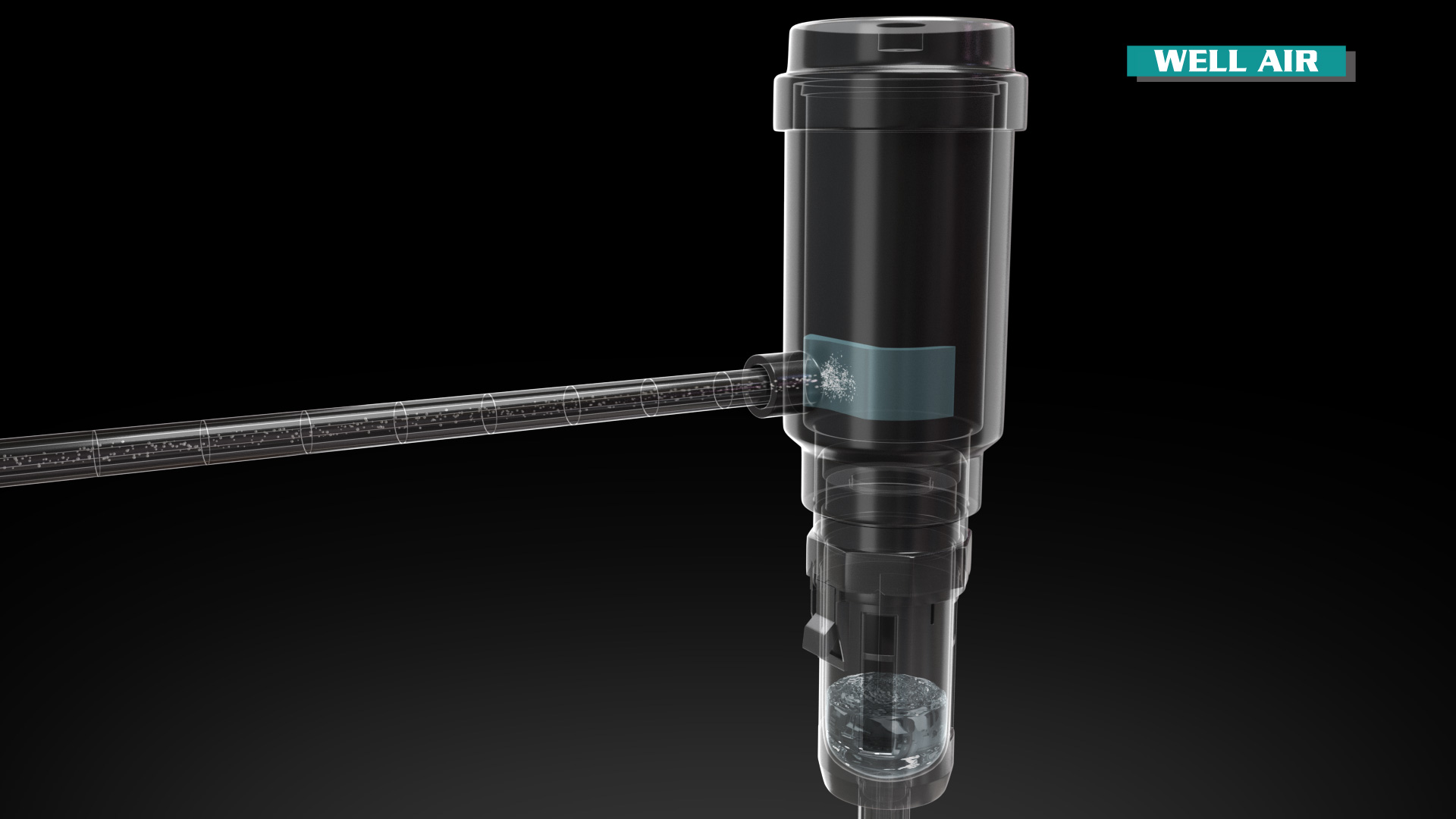
FEATURE 01
Element-less Design
No Filter Replacement
Because it contains no internal element or desiccant, operation does not depend on periodic consumable replacement.

With an element-less design, WELL AIR requires no replacement work,
no consumables management, and no power supply, helping address re-condensation trouble at the point of use.
WELL AIR is a compressed air purifier that does not clog and trap bulk droplets and coarse contaminants,
but instead separates and discharges them.
It is especially suitable for re-condensation drain trouble that occurs just before equipment, even after air has already passed through a dryer.
Even if compressed air is dried by an air dryer, temperature differences along long piping or just before the equipment can cause condensate to form again. If those droplets or contaminants flow directly into the point of use, they may cause pneumatic trouble and product defects.
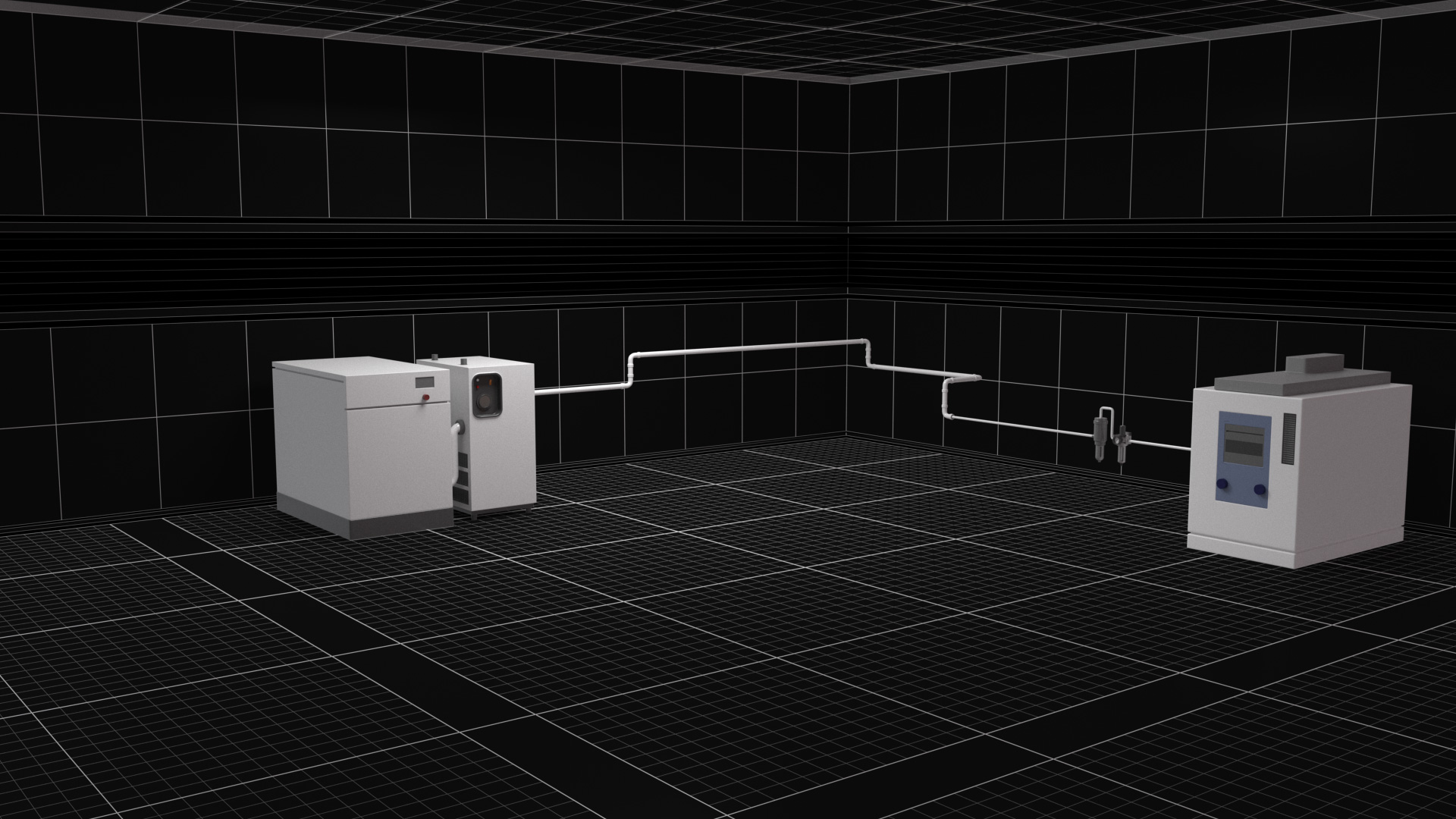
Air dryers are effective at removing moisture immediately after the compressor. However, while the air travels through long piping, temperature differences can cause liquid droplets to form again.
In other words, even air that was once dried can become wet again just before the equipment. This is not necessarily a dryer performance issue, but a physical phenomenon caused by actual piping conditions.
In many factories, filter replacement management itself is difficult. Missed replacement or inspection often prevents the system from maintaining intended performance.
Because it contains no internal element or desiccant, operation does not depend on periodic consumable replacement.
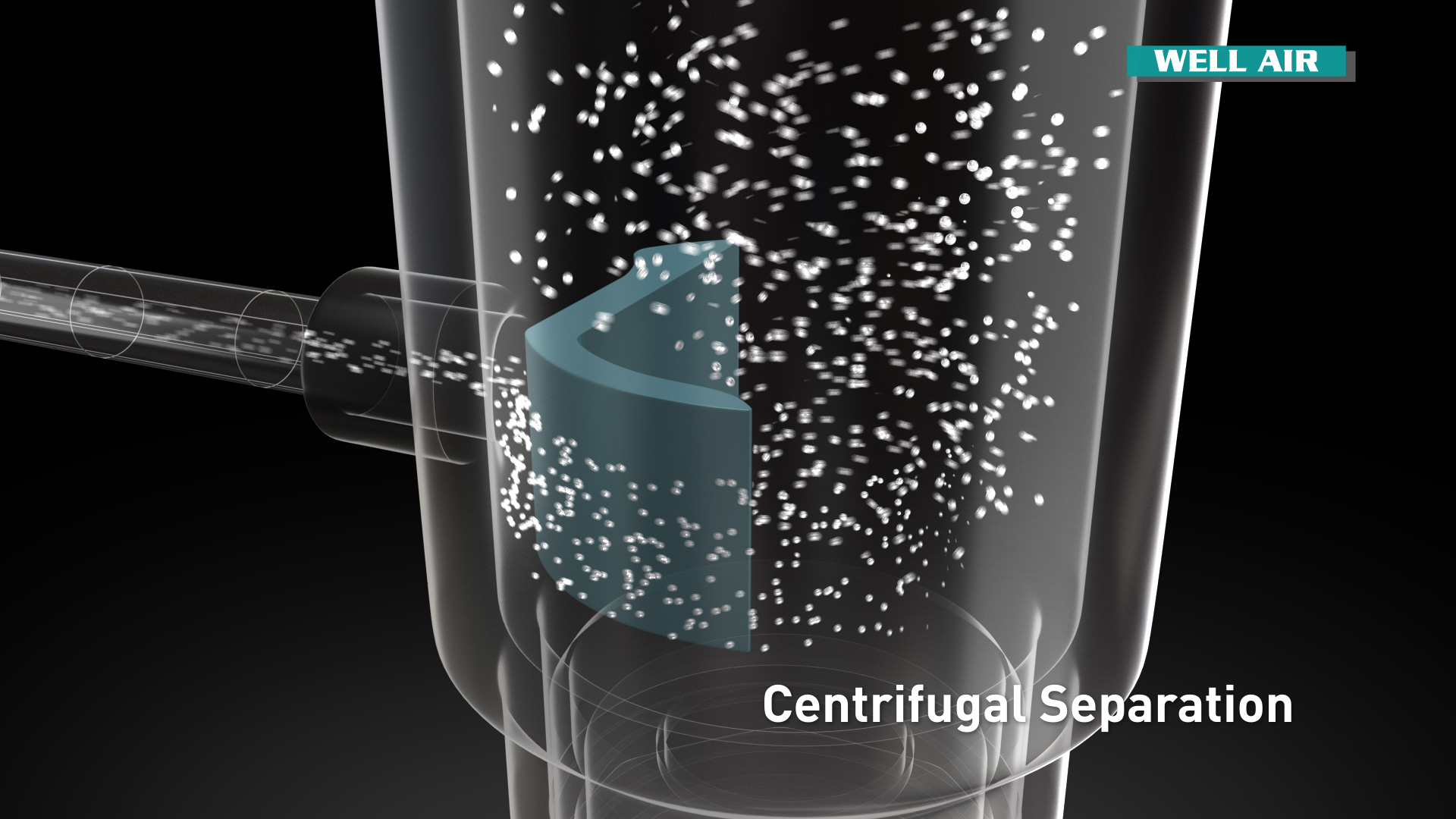
Using no electricity or heat source, WELL AIR handles droplets and contaminants through a physical separation structure driven by airflow itself.
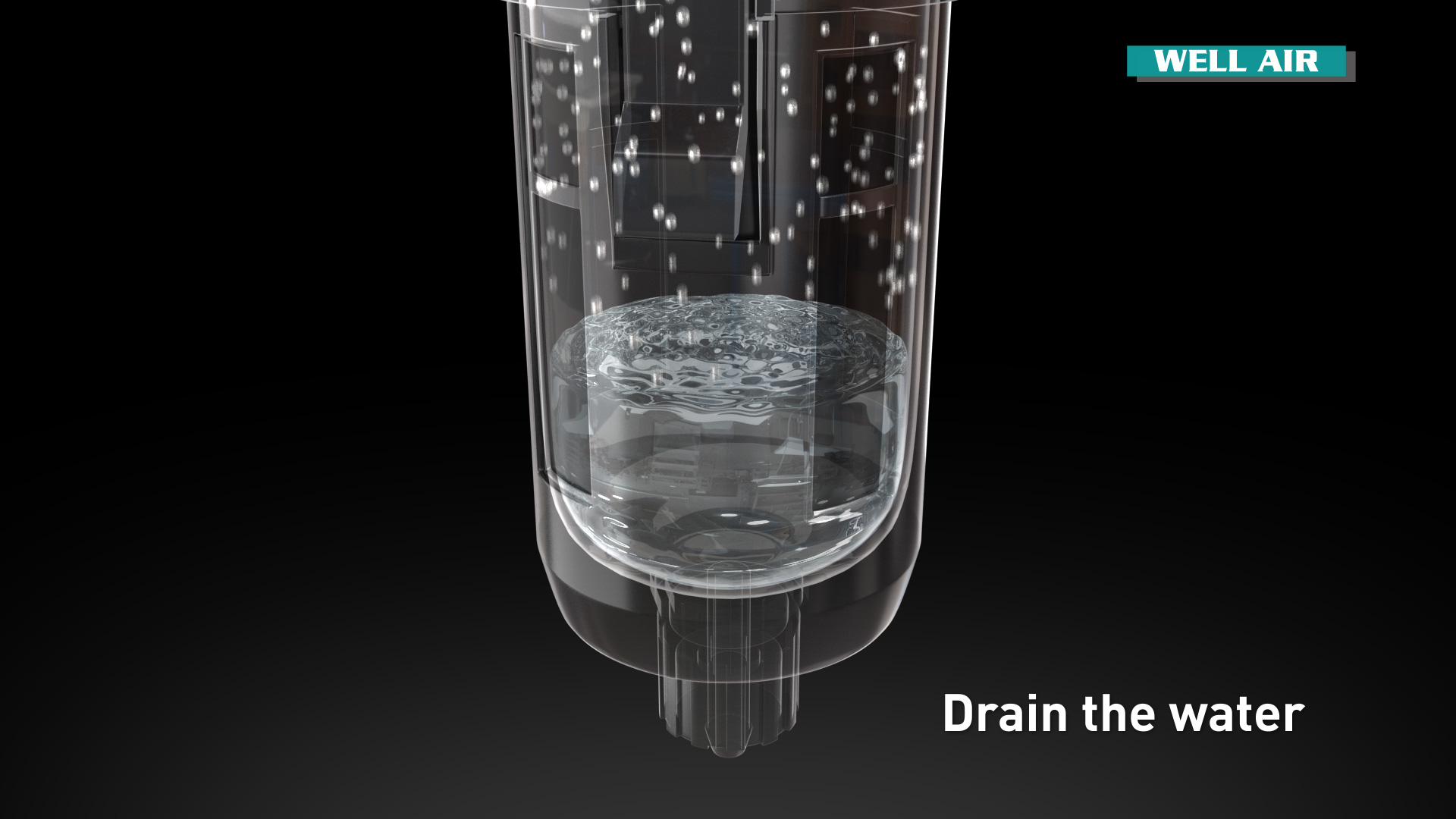
Separated drain is discharged automatically, reducing daily drain handling work and making the unit suitable for point-of-use installation.
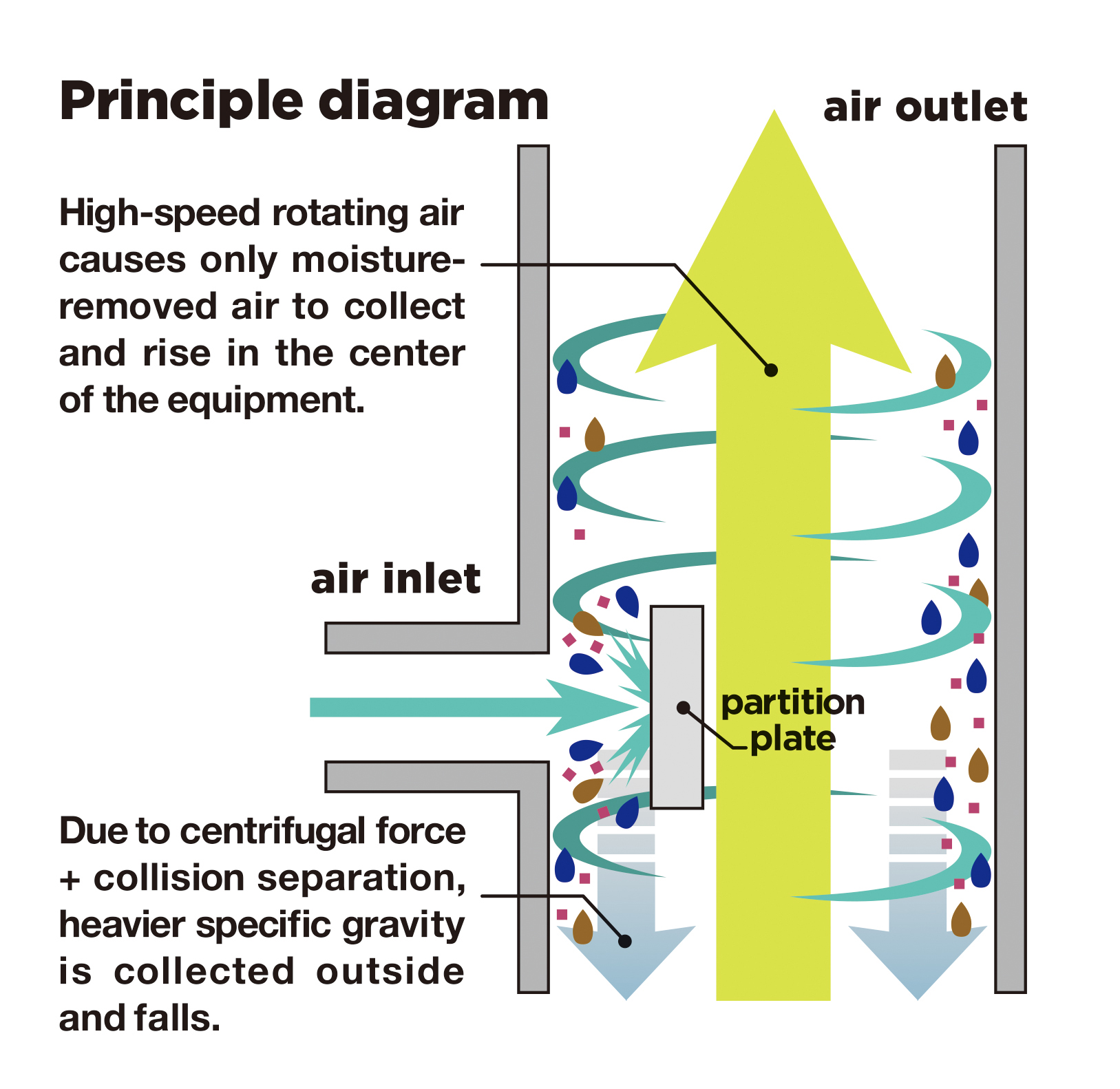
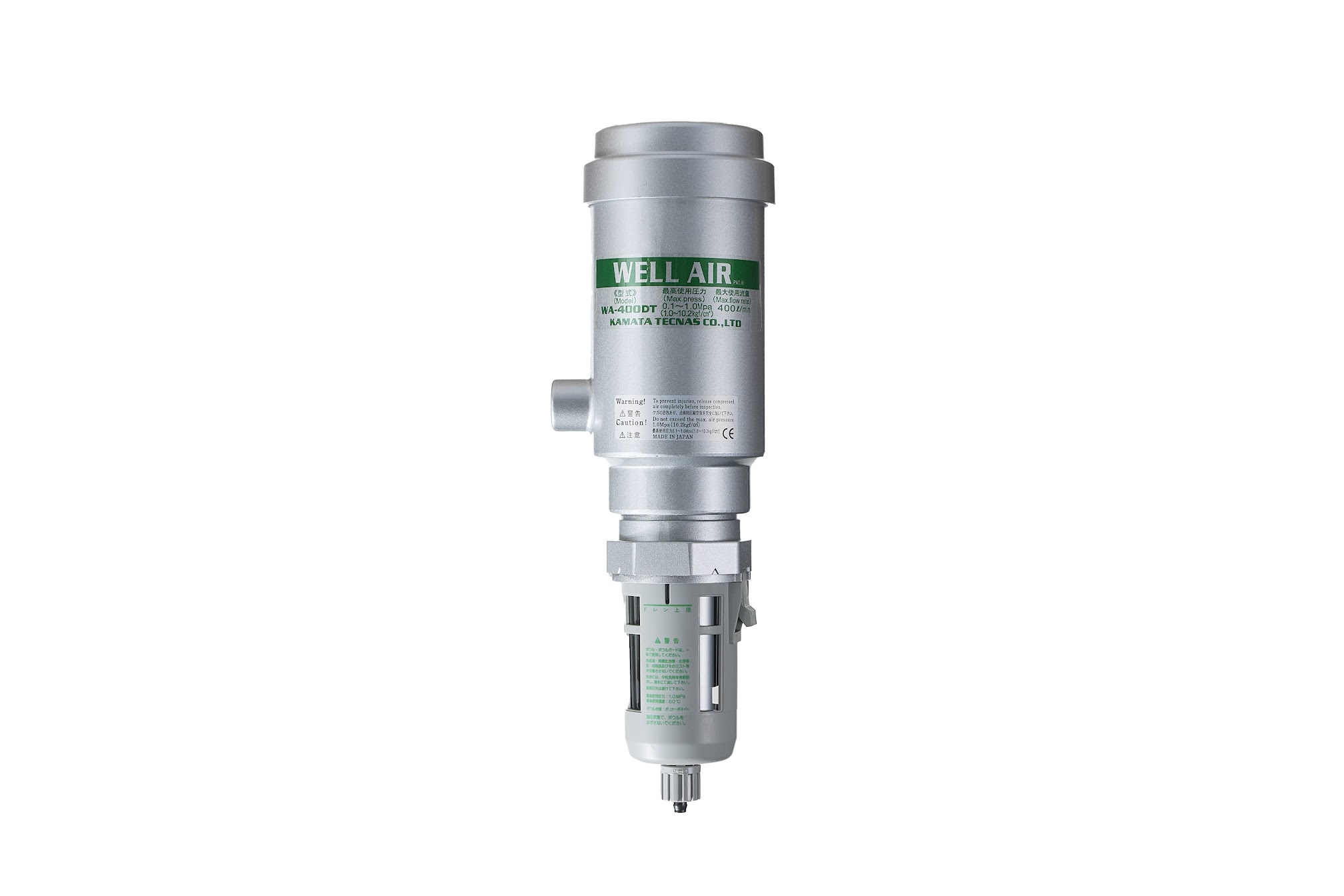
Conventional filters capture contaminants with an element, which makes periodic replacement part of normal operation. As the number of managed units increases, the site burden also grows.
WELL AIR separates droplets and contaminants internally and discharges them through the auto drain. It is especially suitable for handling bulk water and coarse contaminants that cause trouble near the equipment.
If finer mist or very small particles must also be removed, it is rational to combine WELL AIR with a downstream mist filter or similar stage.
WELL AIR is not a one-unit solution for everything. Its strength lies in handling bulk droplets and coarse contaminants near the point of use. If finer mist or smaller particles are required, combining it with downstream filtration is the rational approach.
| Item | WELL AIR | General Filter | Mist Filter | Air Dryer |
|---|---|---|---|---|
| Main Role | Separation of droplets and coarse contaminants | Particle capture | Fine mist capture | Upstream drying |
| Replacement Element | Not required | Required | Required | Maintenance required |
| Re-condensation at Point of Use | Strong | Partial | Partial | Weak |
| Fine Mist / Fine Particles | Limited by itself | Depends on model | Strong | Not applicable |
| Recommended Position | Just before equipment | Depends on use | Downstream of WELL AIR | Just after compressor |
| Operational Burden | Low | Replacement management required | Replacement management required | Periodic maintenance required |
WELL AIRSeparation of droplets and coarse contaminants
General FilterParticle capture
Mist FilterFine mist capture
Air DryerUpstream drying
WELL AIRNot required
General FilterRequired
Mist FilterRequired
Air DryerMaintenance required
WELL AIRStrong
General FilterPartial
Mist FilterPartial
Air DryerWeak
WELL AIRLimited by itself
General FilterDepends on model
Mist FilterStrong
Air DryerNot applicable
WELL AIRJust before equipment
General FilterDepends on use
Mist FilterDownstream of WELL AIR
Air DryerJust after compressor
WELL AIRLow
General FilterReplacement management required
Mist FilterReplacement management required
Air DryerPeriodic maintenance required
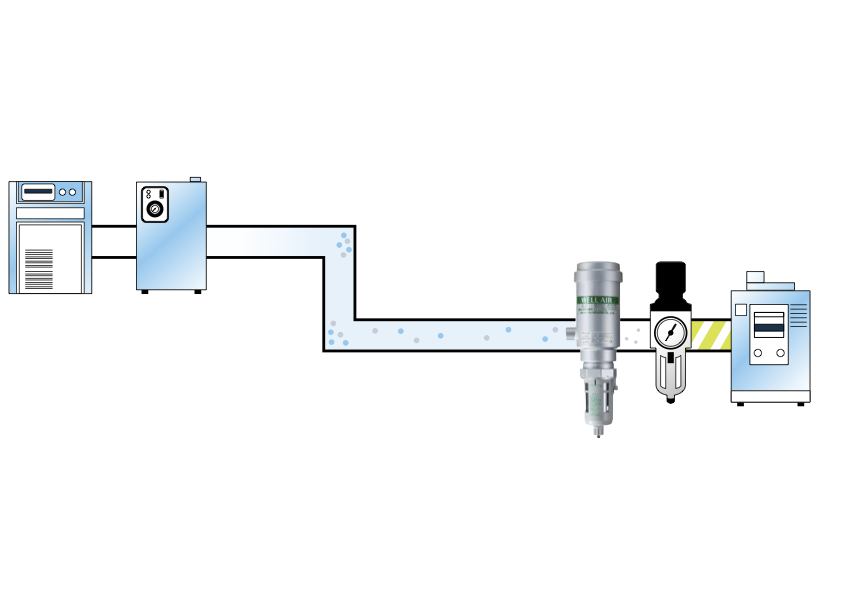
For compressed air cleaning, it is often more rational to divide roles between stages rather than expecting one unit to do everything.
WELL AIR handles re-condensed drain and bulk droplets near the equipment, while a downstream mist filter can be added when finer mist or particles must also be addressed.
Even if a dryer or filter is already installed upstream, adding WELL AIR may improve performance when droplet trouble still remains just before the equipment.
Based on flow rate, port size, installation point, and current trouble conditions, we can propose whether WELL AIR alone is suitable or whether it should be combined with a downstream filter.
KAMATA TECNAS CO., LTD.
1-1-25 Sanchiku, Hakata-ku, Fukuoka-shi, Fukuoka 812-0887, Japan
TEL: +81-92-571-2398
Manufacturer and supplier of the element-less compressed air purifier “WELL AIR”.